
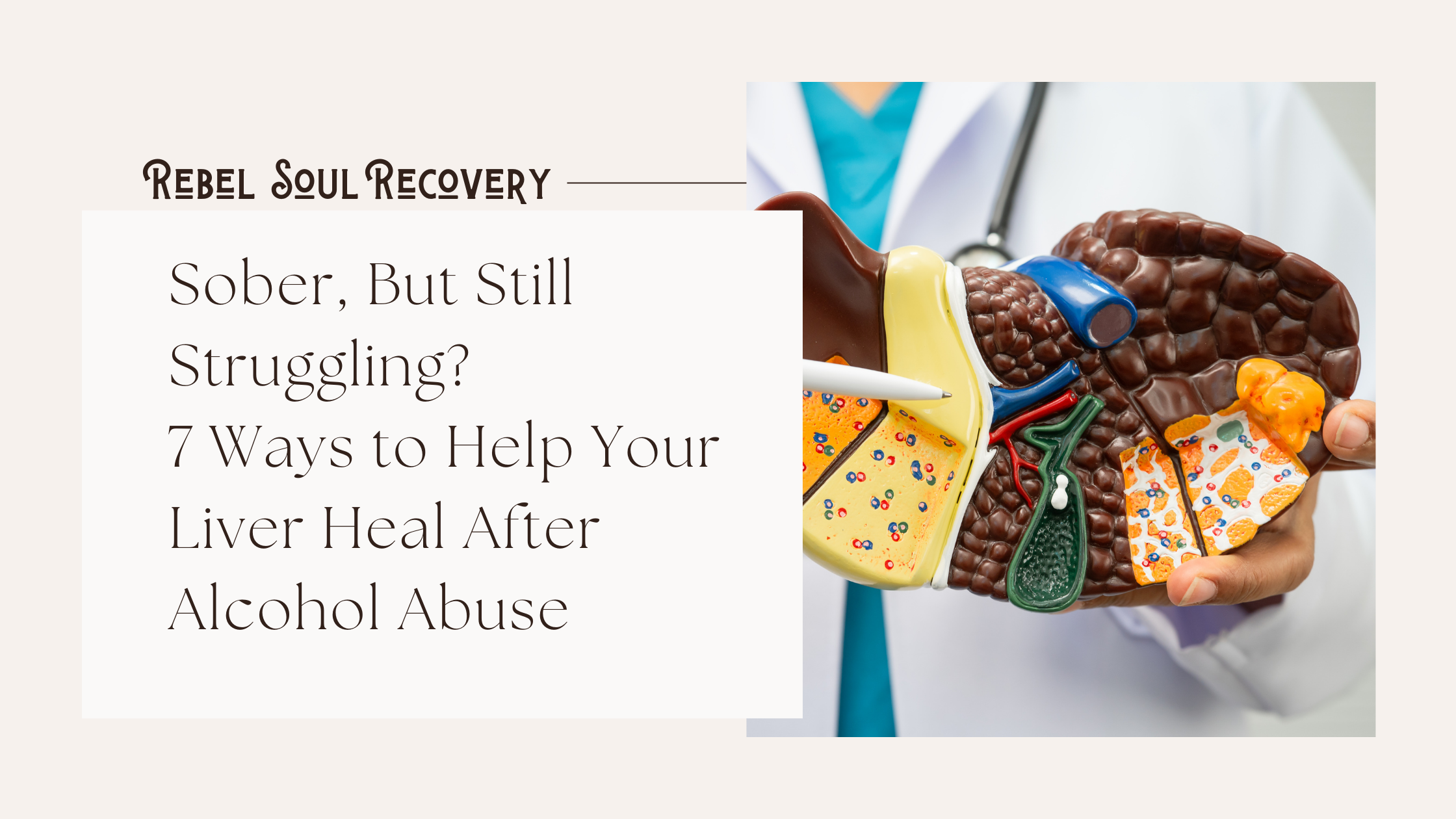
Here are the 7 most effective, evidence-based ways to support liver healing after alcohol abuse.




1. Complete abstinence from alcohol
This is the foundation of all liver healing. Alcohol directly damages liver cells and drives inflammation, scarring, and fat accumulation. Without removing alcohol, no intervention—dietary, medical, or holistic—can meaningfully repair the liver.
2. Medical monitoring and assessment
Alcohol-related liver damage varies from fatty liver to fibrosis and cirrhosis, and each requires different care. Blood tests and imaging track inflammation, enzyme levels, and structural changes. Ongoing monitoring ensures recovery is real, not assumed.
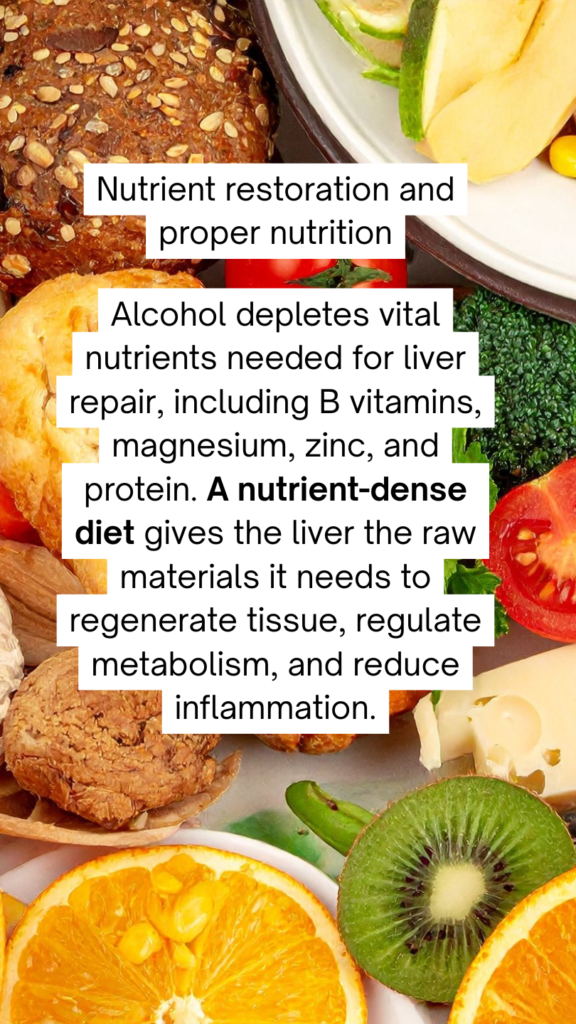
3. Nutrient restoration and proper nutrition
Alcohol depletes vital nutrients needed for liver repair, including B vitamins, magnesium, zinc, and protein. A nutrient-dense diet gives the liver the raw materials it needs to regenerate tissue, regulate metabolism, and reduce inflammation.
4. Blood sugar stabilisation
Alcohol disrupts glucose regulation and damages the liver’s energy storage systems. Eating regular meals with protein, fibre, and healthy fats reduces metabolic stress and supports liver function. This also reduces cravings, fatigue, and nervous system instability in early recovery.
5. Inflammation reduction
Alcohol creates systemic inflammation that slows healing and accelerates scarring. Anti-inflammatory foods, hydration, stress reduction, and gentle movement calm this inflammatory response. Less inflammation = faster and more effective regeneration.
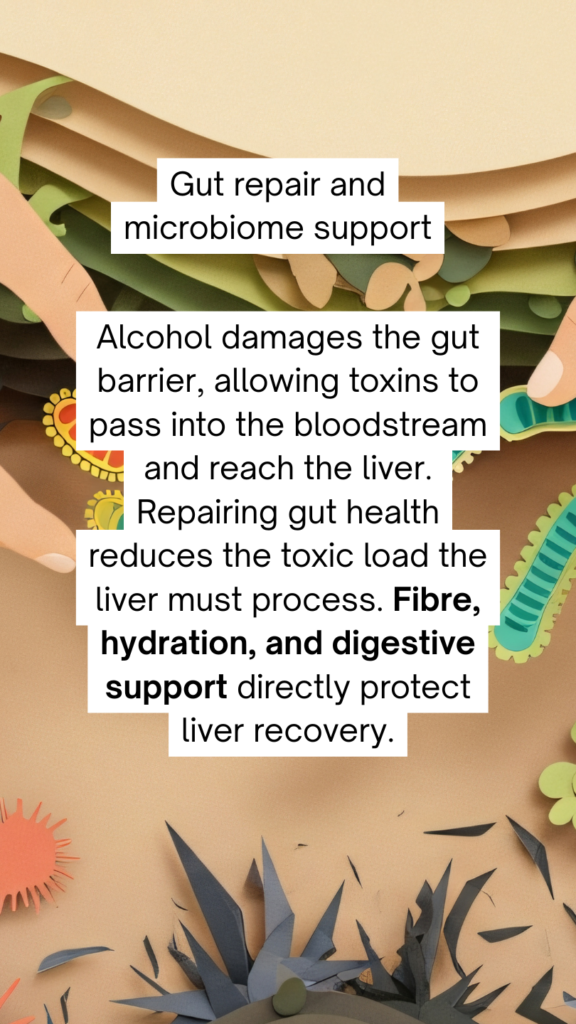
6. Gut repair and microbiome support
Alcohol damages the gut barrier, allowing toxins to pass into the bloodstream and reach the liver. Repairing gut health reduces the toxic load the liver must process. Fibre, hydration, and digestive support directly protect liver recovery.
7. Nervous system regulation and rest
Chronic alcohol use dysregulates stress hormones and sleep cycles. Healing requires shifting the body out of survival mode and into repair mode. Deep rest, consistent sleep, and emotional regulation create the internal conditions where regeneration becomes possible.
Leave a Reply