
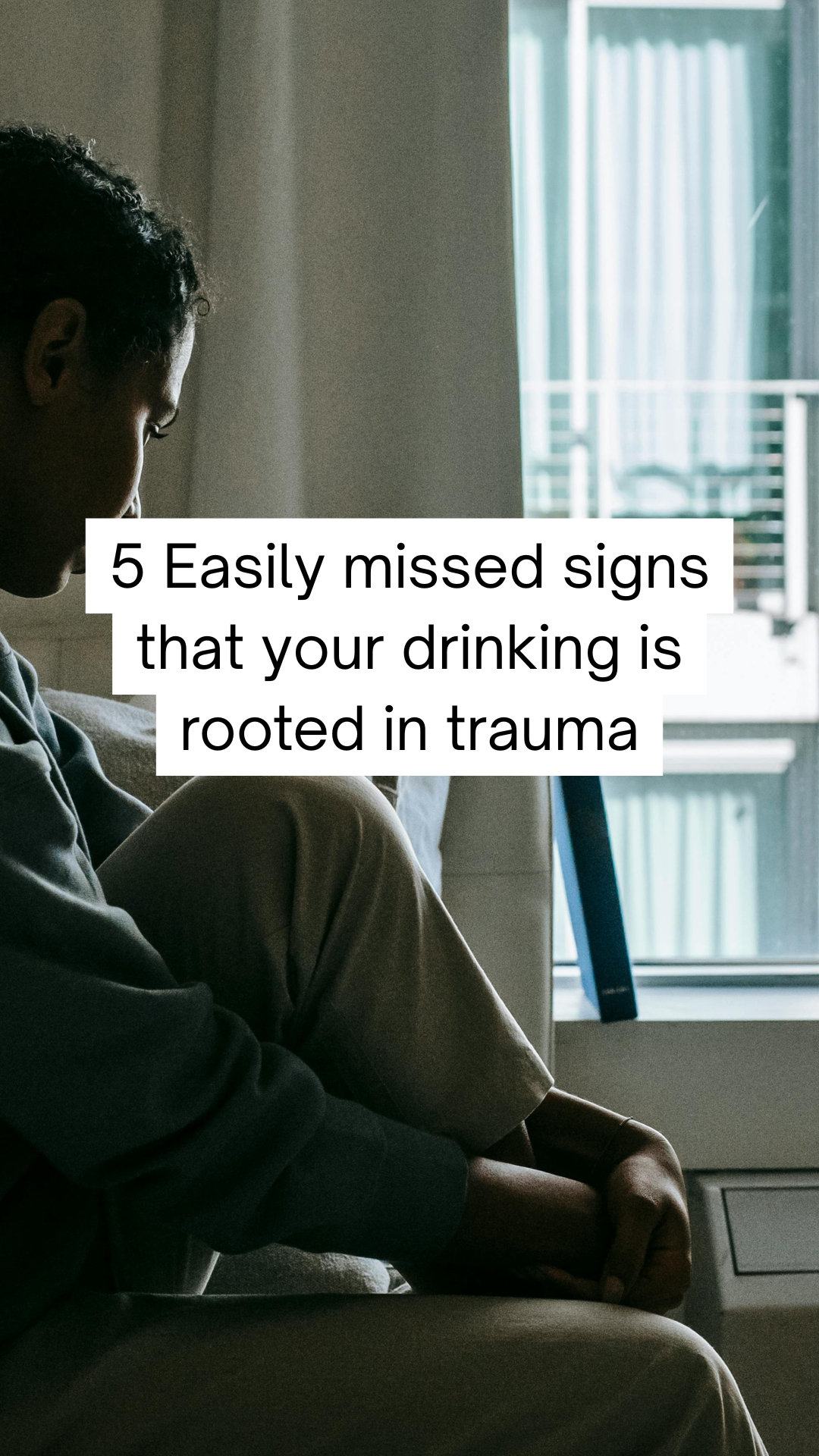
Here are five signs that your drinking might be rooted in unresolved trauma rather than just habit or “liking a drink”:
- You don’t just want a drink, you want a complete emotional shutdown
It’s less about taste or socialising and more about the feeling of relief when your thoughts finally go quiet. Alcohol becomes a fast way to numb anxiety, memories, or an underlying sense of dread you can’t quite explain. - Certain emotions feel intolerable without alcohol
Loneliness, rejection, anger, or even boredom feel almost unmanageable unless you can soften them with a drink. Instead of processing feelings, you regularly sedate them. - You drink most when you feel triggered, not when you’re celebrating
You might notice your heaviest drinking follows conflict, criticism, abandonment, or feeling unseen. The urge spikes after situations that echo old wounds, even if you don’t consciously link the two. - You feel oddly unsafe or exposed when sober
Being fully present in your body and mind can feel edgy, vulnerable, or raw. Alcohol creates a buffer between you and the world, as if sobriety leaves you without emotional skin. - You tell yourself “it’s not that bad” while secretly feeling shame
There’s a quiet inner voice that knows your drinking is doing more than taking the edge off. You minimise it to others (and yourself), yet carry a private heaviness or self-criticism that keeps repeating the cycle.

Recovering from unresolved trauma begins with gentleness. Healing grows through safety, patience, and steady support rather than pressure or urgency. Many people try to push painful memories away or rush toward a sense of freedom, yet deep recovery asks for a slower and kinder approach.
Trauma leaves an imprint on the body and the nervous system. Because of this, healing starts with practices that help you feel grounded in the present moment. Slow breathing, time outdoors, stretching, yoga, or simply placing a hand on your heart can send signals of safety through your whole system. These small daily rituals build a foundation of calm that allows deeper work to happen with care.
An essential part of this deeper work is shadow work. This means turning toward the hidden, disowned, or painful parts of your story with honesty and compassion. Instead of pushing shame, anger, grief, or fear into the background, you gently bring them into awareness. Writing, therapy, guided reflection, and honest conversations can all support this process. As these buried feelings receive attention and understanding, they lose their grip and begin to soften.
This process closely mirrors the spirit of Steps Four and Five in twelve step work, where a person takes a courageous personal inventory and shares it with a safe, trusted witness. Speaking the truth about your past in a supported and compassionate space can bring immense relief and freedom. Twelve step groups such as AA offer one powerful path for this kind of work, but it is not the only route. Many people find healing through therapy, spiritual direction, coaching, or other recovery communities. What matters most is safe guidance, willingness, and self-honesty.
Self-compassion remains central throughout. Old coping behaviours once served a purpose and helped you survive. Meeting those parts of yourself with warmth rather than criticism allows real integration and growth.
Healing moves in waves. Subtle shifts such as quicker recovery after a trigger or moments of genuine peace show your system learning safety again. With patience, supportive relationships, and brave shadow work, unresolved trauma can be welcomed, understood, and gradually released.
Leave a Reply